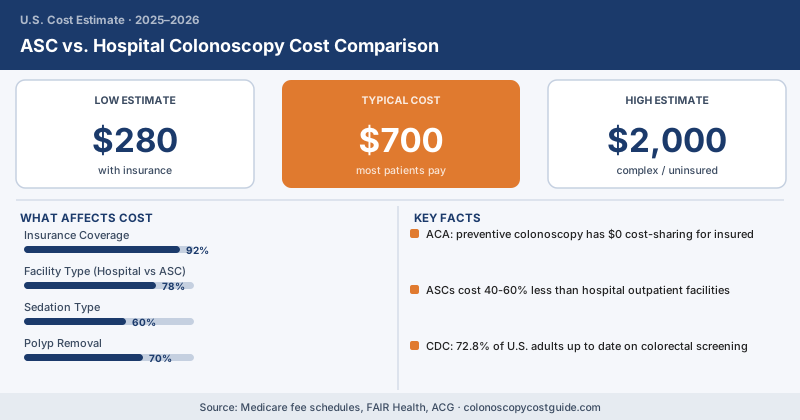
Ambulatory Surgery Center vs. Hospital Colonoscopy Cost: How Much You Save
{ if eq .Lang "zh" }{ else }{ end }Where you have your colonoscopy can cost you $1,500 more — and your doctor may never mention the option. The facility type (ambulatory surgery center vs. hospital outpatient department) is one of the biggest controllable variables in colonoscopy pricing, yet most patients never think to ask. They just go wherever their GI doctor’s scheduler says.
A 2022 Health Affairs study found that colonoscopies performed at hospital outpatient departments cost Medicare 2.3 times more than the same procedures at ambulatory surgery centers. For commercially insured patients paying a percentage of costs, that gap translates directly to their bill.
The Price Gap in Real Numbers
Here’s what the difference looks like in actual billed charges and patient out-of-pocket:
| Cost Component | Hospital Outpatient Dept | Ambulatory Surgery Center | Typical Savings at ASC |
|---|---|---|---|
| Facility fee (billed) | $2,500–$5,000 | $800–$1,800 | 50–65% lower |
| Physician fee | $300–$600 | $300–$600 | Same (separate billing) |
| Anesthesia | $400–$900 | $300–$700 | 20–30% lower |
| Total billed charges | $3,200–$6,500 | $1,400–$3,100 | ~50% lower |
| Patient out-of-pocket (insured, 20% coinsurance) | $640–$1,300 | $280–$620 | ~$600 savings typical |
| Medicare patient out-of-pocket | $450–$1,100 | $200–$500 | ~$400–$600 savings |
These figures assume the procedure is diagnostic (deductible and coinsurance apply). For preventive colonoscopies at $0 cost-sharing, the facility type doesn’t change your bill — but it does affect what your insurance company pays, which can matter for your plan’s stability and premiums.
Why Hospitals Charge So Much More
It’s not arbitrary. Hospitals have higher overhead — 24/7 emergency capabilities, ICU infrastructure, inpatient beds, academic training programs, complex case management — and they’re allowed to bill a separate facility fee that includes a “hospital outpatient department” premium under Medicare’s payment system.
Medicare pays hospital outpatient departments under the Outpatient Prospective Payment System (OPPS), which reimburses at higher rates than the Medicare Physician Fee Schedule rates used for ASCs. This differential was designed to account for hospitals’ higher fixed costs, but critics argue it has become a windfall that incentivizes hospitals to acquire physician practices and reclassify them as hospital outpatient departments — increasing costs without changing the setting patients actually visit.
What Is an Ambulatory Surgery Center?
An ASC is a freestanding facility licensed specifically to perform outpatient surgical and endoscopic procedures. It’s not a doctor’s office and it’s not a hospital. It’s a procedure-only facility — built for efficiency and lower overhead. Most GI procedures, including colonoscopy, upper endoscopy, and flexible sigmoidoscopy, are entirely appropriate for ASC settings in healthy outpatient candidates.
ASCs typically have:
- Same-day in and out (2–4 hours total)
- Dedicated endoscopy suites with specialized staff
- Lower overhead = lower facility fees
- Typically more flexible scheduling and shorter wait times
The clinical quality at accredited ASCs is equivalent to hospital outpatient departments for routine GI procedures. The Accreditation Association for Ambulatory Health Care (AAAHC) and The Joint Commission both certify ASCs.
When the Hospital Is Genuinely the Right Choice
Not everyone should default to the ASC. There are clinical situations where the hospital’s capabilities matter:
- Complex cardiac or pulmonary history: If you’re at elevated anesthesia risk, a hospital’s immediate backup is valuable
- Prior complicated colonoscopies: History of perforation, difficult anatomy, or incomplete exams at ASC
- Active anticoagulation requiring bridging: Requires closer monitoring
- Inflammatory bowel disease with active disease: Complex endoscopy protocols may be better supported at a hospital GI unit
- Patients requiring inpatient admission after procedure: Obviously requires hospital setting
For healthy average-risk adults getting a routine screening or surveillance colonoscopy, there’s no clinical reason to choose a hospital over a well-accredited ASC — but most don’t know they have the option.
How to Find Out If Your GI Doctor Performs at an ASC
Call your GI doctor’s scheduling line and ask directly: “Do you perform colonoscopies at an ambulatory surgery center as well as at the hospital? And if so, can you tell me the billed charges and my estimated out-of-pocket at each location?”
Many gastroenterologists work at both settings. The ASC option may not be the default scheduler choice, but it’s often available. If your specific GI doctor only works at a hospital, you can also ask for a referral to a colleague who works at an ASC.
The Hospital-Owned ASC Trap
Here’s a nuance: many hospitals have purchased or affiliated with ASCs, or opened ASCs on their campus. A facility may be called “[Hospital Name] Outpatient Endoscopy Center” but technically billed as a hospital outpatient department — at hospital rates.
When you’re comparing options, ask specifically: “Is this facility billed as a hospital outpatient department or as a freestanding ASC?” The distinction matters for your bill. A hospital-affiliated endoscopy center may look like an ASC but carry hospital facility fees.
Insurance Network Considerations
Your ASC savings only materialize if the ASC is in your insurance network. An out-of-network ASC could end up costing more than an in-network hospital, due to higher negotiated rates or balance billing.
Before scheduling at any facility:
- Confirm the facility is in your insurance network (not just the physician)
- Confirm the anesthesiologist is also in-network (they often bill separately)
- Get an estimate of your out-of-pocket from both the facility and your insurance
For the full picture of how colonoscopy facility fees break down, the colonoscopy facility fee breakdown article explains every line item on a typical bill. And for tips on actively negotiating your cost, see colonoscopy cost negotiation tips.
{ if eq .Lang "zh" }