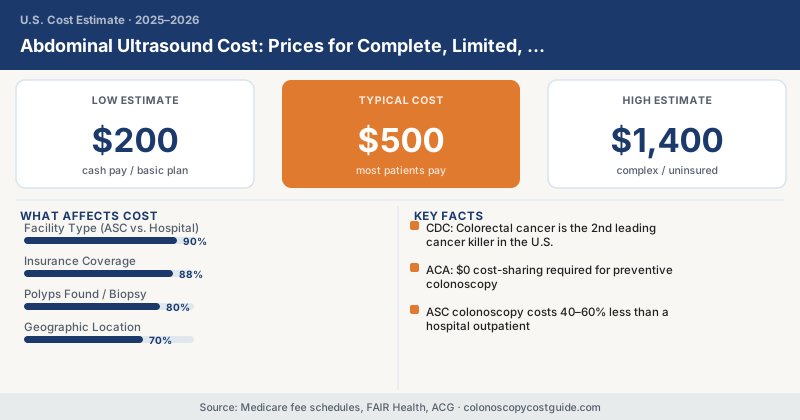
Abdominal Ultrasound Cost: Prices for Complete, Limited, and Targeted Exams
In 2010, an abdominal ultrasound averaged about $340. Today, the same scan can run $1,000 at a hospital imaging center — or $200 at a freestanding radiology clinic down the street. Same test. Same information. Different building, very different bill.
Abdominal ultrasound is one of the most common imaging tools gastroenterologists use to evaluate the liver, gallbladder, bile ducts, pancreas, spleen, and kidneys. It uses sound waves — no radiation, no contrast dye, no sedation. That simplicity doesn’t stop the billing from getting complicated.
Abdominal Ultrasound Cost by Type
There are three main types of abdominal ultrasound, each with its own CPT code and price range:
| Exam Type | CPT Code | Freestanding Radiology | Hospital Outpatient |
|---|---|---|---|
| Complete abdominal ultrasound | 76700 | $250 – $650 | $600 – $1,400 |
| Limited abdominal ultrasound | 76705 | $150 – $400 | $400 – $900 |
| Right upper quadrant (RUQ) only | 76705 | $150 – $350 | $350 – $800 |
| Aortic screening ultrasound | 76706 | $200 – $500 | $400 – $800 |
Complete abdominal ultrasound (CPT 76700) images all abdominal organs in one session — liver, gallbladder, bile ducts, pancreas, spleen, kidneys, and aorta. It’s what most GI doctors order when they want a broad picture.
Limited ultrasound (CPT 76705) targets one or two specific areas — most commonly the right upper quadrant to evaluate the gallbladder and liver. It’s used when your symptoms point to a specific organ.
What’s Included in the Bill?
Two separate charges usually appear:
- Technical fee: Operating the equipment, the technician’s time, and the images captured. Paid to the facility.
- Professional fee: The radiologist’s interpretation of the images. Paid to the reading physician — often a separate billing entity from the facility.
At a hospital, you’ll get two bills. At an imaging center, they’re often bundled. Either way, budget for both.
The American College of Radiology (ACR) reported in its 2023 fee analysis that the professional component for CPT 76700 has a national median of roughly $85–$120, while the technical component is where the wide price variation lives — from under $200 at independent imaging centers to over $1,000 at hospital systems.
Insurance Coverage for Abdominal Ultrasound
Insurance covers abdominal ultrasound when it’s medically indicated — ordered by a physician with a documented diagnosis code. Common indications include abdominal pain, elevated liver enzymes, suspected gallstones, fatty liver disease evaluation, and monitoring of known liver disease.
If you’re being evaluated for abdominal pain that may relate to your GI tract — and you’re also getting a colonoscopy or EGD for other reasons — the ultrasound is typically billed and processed as a separate claim.
How Much You'll Pay With Insurance
Your out-of-pocket cost depends heavily on your plan type:
- Deductible met, in-network: $50–$200 coinsurance (10–30% of the contracted rate)
- Deductible NOT met: Full contracted rate — commonly $250–$600 at in-network radiology facilities
- HSA/HDHP plan, deductible not met: You pay the full discounted rate (typically lower than list price)
- Medicare Part B: 20% after the Part B deductible — national average is about $40–$90 for a complete abdominal ultrasound
- Medicaid: Generally covered; small copay of $0–$5 in most states
Without Insurance: Cash Pay Options
Uninsured patients have real options to cut costs dramatically. Freestanding radiology centers often have cash-pay rates that are 50–70% below their list prices.
FAIR Health data shows median cash prices for CPT 76700 in major metro areas range from $280 to $480 at freestanding imaging centers — compared to $800–$1,200 at hospital systems. Always ask: “What’s your cash-pay or self-pay rate?”
Direct-to-consumer ultrasound services like SimonMed, RadNet, or Butterfly Network affiliates offer abdominal ultrasounds starting at $150–$250 in some markets. These typically require a physician order but not a specialist referral.
When Do You Need an Abdominal Ultrasound vs. CT or MRI?
Ultrasound is usually the first-line imaging for:
- Suspected gallstones — ultrasound is over 95% sensitive for gallstones per ASGE clinical guidelines
- Fatty liver disease evaluation — cost-effective initial assessment
- Liver mass characterization in low-risk patients
- Aortic aneurysm screening in older male smokers (one-time Medicare benefit)
CT scan and MRI are usually next steps when ultrasound is inconclusive or when soft tissue detail matters more. Both cost significantly more — CT abdomen runs $600–$3,000 depending on contrast and facility; MRI abdomen is $800–$4,000+.
Tips to Reduce Your Ultrasound Cost
- Go freestanding over hospital outpatient — the difference can be $400 or more for the same scan.
- Call your insurer first and ask for the “allowed amount” for CPT 76700 at in-network facilities in your area.
- Ask if you can defer until your deductible resets — if you’ve already met it this year, schedule before December 31.
- Check direct-to-consumer imaging platforms — some offer imaging without a specialist referral at low fixed prices.
- Community health centers (FQHCs) include diagnostic imaging in their sliding-scale services in many markets.
An abdominal ultrasound doesn’t have to be a $1,000 line item on your medical bills. A little research before you schedule can cut that cost by more than half.