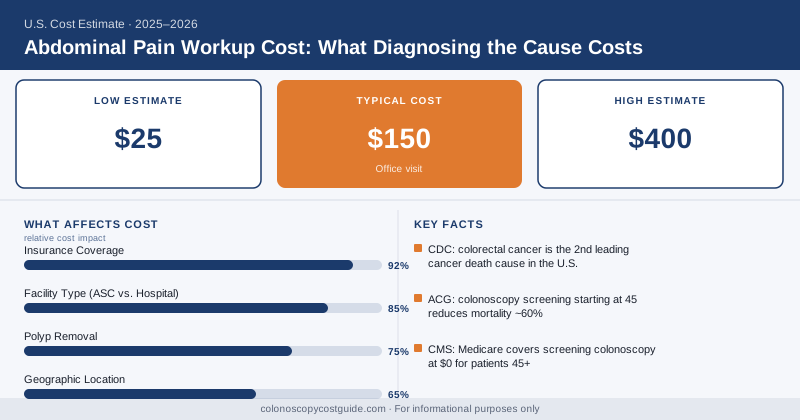
Abdominal Pain Workup Cost: What Diagnosing the Cause Costs
{ if eq .Lang "zh" }{ else }{ end }The same abdominal pain can cost you $300 or $8,000 to diagnose, and the difference often comes down to one decision: clinic or emergency room. The tests themselves overlap heavily. The bills do not.
Let’s walk through what the workup includes and where the money actually goes.
The Clinic Path
For pain that isn’t severe or sudden, the outpatient route starts cheap. Your doctor takes a history, examines you, and orders targeted labs and maybe an ultrasound before anything fancier.
| Clinic Workup Component | Cash Cost | With Insurance |
|---|---|---|
| Office visit | $150 – $400 | $25 – $75 copay |
| CBC + metabolic panel | $80 – $250 | $5 – $50 |
| Liver / lipase / amylase labs | $80 – $300 | $10 – $60 |
| Abdominal ultrasound | $200 – $1,000 | $50 – $300 |
| Urinalysis | $20 – $100 | $0 – $20 |
The NIDDK reports that digestive diseases account for tens of millions of ambulatory care visits in the U.S. every year, and abdominal pain is consistently among the top reasons people seek care. Most of those visits resolve with labs and an ultrasound — no scope required.
When Imaging Escalates
If labs and ultrasound don’t explain the pain, the next tier is cross-sectional imaging or endoscopy. A CT scan of the abdomen is the workhorse here.
| Escalated Test | Outpatient Cost | ER Cost |
|---|---|---|
| Abdominal/pelvic CT scan | $300 – $3,000 | $1,500 – $6,000+ |
| Upper endoscopy (EGD) | $1,000 – $4,000 | $2,500 – $7,000 |
| Diagnostic colonoscopy | $1,200 – $5,000 | $3,000 – $8,000 |
| MRI of the abdomen | $500 – $4,000 | $2,000 – $7,000 |
Notice the gap. The exact same CT scan costs several times more when it’s run through an ER. If your pain is stable and not an emergency, the outpatient path saves real money.
Key Takeaway
When the ER Is the Right Call
To be clear, sometimes the ER is exactly where you belong, and the cost is worth it. Sudden, severe pain, pain with fever or vomiting, a rigid abdomen, or pain with chest symptoms can signal an emergency where speed matters more than the bill.
Endoscopy and Colonoscopy for Persistent Pain
When upper-abdomen pain keeps coming back, an upper endoscopy can find ulcers, gastritis, or reflux damage. For lower-abdomen or bowel-pattern pain, a colonoscopy checks for inflammation, diverticular disease, or polyps. Both are diagnostic when ordered for pain, so they’re billed against your deductible.
The Bottom Line
A straightforward outpatient workup — visit, labs, ultrasound — usually lands between $300 and $1,500. Add a CT scan and you’re at $1,000–$4,000 outpatient. Run any of it through the ER and the same care can double or triple. If you don’t have coverage, weigh that against the reality that a colonoscopy without insurance at a surgery center is often far cheaper than a hospital-based one. Choose the setting deliberately, and the workup stays affordable.
{ if eq .Lang "zh" }